Showing posts with label K. Resources. Show all posts

Monday, June 2, 2008

The Current: Preventing Cyberbullying

Time: Too early to mention, June 2, 2008
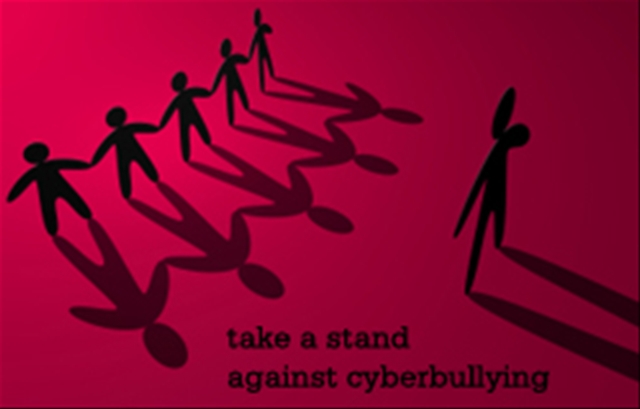
So, I just did a simply search in Google News for all current news items about "cyberbullying".
Here's a taste of some of the news articles titles:

Cyberbullying Conference at the County Center

Mom in Cyberbullying Suicide Case Launches Foundation 

Illinois Lawmakers OK Ban on Cyberbullying

Rosman High Fight Video Leads to Formation of Task Force

Arizona Youth Warned Against Online Predators and Cyberbullying

Do We Need a Federal Law Against Cyberbullying?

Teach Your Kids to be Safe While They're Online


All of these news articles were published online and in newspapers within the last month.
Cyberbullying is out there, it's current, and it's being talked about.
So, why don't YOU talk about it?
During lunch while hanging out with your friends, ask them what they think about
cyberbullying, and if they know of anyone who is/had been affected.
Use the information on our awesome blog to:

- inform your friends and family about the dangers of cyberbullying, 

- support those who have been a target of cyberbullying or those who think they
might be cyberbulliers, 

- prevent cyberbullying from occurring in the first place or from happening again, 

- and acknowledge that cyberbullying is a problem...that YOU can help SOLVE

Friday, May 30, 2008

Megan's mom aims to prevent cyberbullying


Mom in Cyberbullying Suicide Case Launches Foundation
By Kim Zetter May 30, 2008 1:24:02 PMCategories: Crime

Tina Meier, the mother of the Missouri teen who committed suicide after being bullied online has launched a foundation to educate kids and parents about cyberbullying and work on legislation to address the growing phenomenon.

The Megan Meier Foundation's web site has resources for educators, parents and teens that include a list of emoticons and their meanings to help parents understand the online language their kids are using as well as explainations about the kinds of technologies kids are using to communicate with one another. The site features the stories of other teens who have also been bullied online.

Photo: AP

Sunday, May 25, 2008

Our business cards...cool enough to stop cyberbulliers in their tracks!

So, a member of our student nursing group designed this rad business card. Don't mind the top part being upside-down, that's just part of the template.

What do you think?

If you're asking for my two cents worth, I say it's awesome and creative.

We're looking forward to handing out the business cards to kids like you who may wish to give us a look-see.

Wednesday, May 14, 2008

Articles and Conferences

Cyberbullying is written about in scholarly journals, on websites, in school papers, in books, and discussed at conferences and in countless school hallways.

We hope to update this post often with new and interesting references for you to look up and read independently.


Please post a comment if you find other sources worth referencing here.


Patchin, J. W. and Hinduja, S. (2006). Bullies Move beyond the Schoolyard: A Preliminary Look at Cyberbullying. Youth Violence and Juvenile Justice, 4(2), 148-169.


Shariff S. and Gouin, R. (2005), Cyber-Dilemmas: Gendered Hierarchies, Free Expression and Cyber-Safety in Schools. Presented at “Safety and Security in a Networked World: Balancing Cyber-Rights and Responsibilities,” Oxford Internet Institute conference, Oxford , U.K. , September 8–10, 2005.

Attention: Teens, parents, and teachers.


Today, much communication is being conducted through the internet. A Media Awareness Network study states that half of kids and teens using the internet are by themselves when they are online and of all of these young people, 16% acknowledge talking to their parents about what their doing online[1]. This makes the internet an easy target for people to experiencing bullying- they can be reached whenever, by whomever, and its difficult to track where messages come from.

The easiest way to avoid being cyber-bullied is to keep your contact information private! Don’t give out personal information to strangers and don’t ever give out your passwords, or pin numbers.

If you are experiencing cyber bullying, you are NOT ALONE! The Media Awareness Network states that a University of Toronto survey (2008) revealed that one in five students in Canada had been cyber bullied within the last three months[2]

If you, or someone you know, is experiencing cyber bullying, it is important to note that internet service providers, and cell phone service providers generally have signed contracts with every client that state what the rights of each client are, when accessing their services. As cyber bullying is often considered to be a crime, a person is breaking this type of contract when they engage in certain acts of cyber bullying. Therefore, many internet services providers and cell phone providers will help to track down cyber bullys, or at least help with who to contact if you are experiencing cyber bullying[3].

If you are a teen who is experiencing cyber bullying here are some other ides of what you can do to deal with it:

  • DO NOT reply to any bullying messages

  • If you can, block the bullying messages

  • Stop the activity right way- hang up the phone, leave the chat room, sign out of your online messaging, etc.

  • Save all messages and forward them to your internet or cell phone provider

  • Tell someone you trust

  • If this bullying includes physical threats, tell the police as well

If you are a parent or teacher and want to address this serious situation try:

  • Communicating with your kids/students about their online activities

  • Relaying the importance of responsible posting and communication- keeping contact information, codes, etc., private

  • Encouraging children and students to come to you if they are having problems

  • Discussing the importance of being respectful to others online, as well as in person

  • Know how to contact your internet and cell phone providers in case of cyber bullying.

  • Know your legal rights with regards to internet and cell phone access in case of cyber bullying

o http://www.ctvtoronto.ca/servlet/an/local/CTVNews/20070416/cyberbullying_legislation_070416?hub=TorontoNewHome

o Provisions in the Criminal Code of Canada

§ it is a crime to communicate with someone over and over if the communications results in their fearing for their safety, or the safety of others

§ It is a crime to publish write something to purposefully insult a person, or injure their reputation (hateful, contempt and ridiculing writings fall under this category- called a “defamatory libel”).[4]

o Canadian Human Right’s Act

§ It is a human right’s violation to discriminate or spread hate for reasons such as race, national or ethnic origin, skin colour, religion, age, sex, sexual orientation, marital status, family status or disability.[5]

  • Watch for signs that something is upsetting a child or student- approach them!

If you think someone you know is engaging in cyber bullying themselves, please talk about it with them. People may not be aware that what they are doing is wrong or hurtful and may stop if it is brought up. If you think that a friend or family member is experiencing cyber bullying don’t hesitate to talk about it! It is common for people to want help, but they don’t know how to bring it up.

Internet Service Providers (ISP) want to know about cyberbullying!


Tell the people who bring the World Wide Web into your home about your cyberbullying experience.
Nip it in the bud, yo.

Bell/Sympatico: abuse@sympatico.ca

Rogers/AT & T: abuse@rogersbusiness.com

Telus: abuse@telusplanet.net


I may be a victim of cyberbullying. What do I do?

Remember that you are not alone, but you must take charge to change the situation. There are many helpful online resources and some helpful points from a couple have been included on this blog, it is strongly suggested that you check out the sites for more information and guidance.

Website: http://www.kidshelpphone.ca/en/home.asp

Get information on cyberbullying and what you can do if it happens to you or someone you know

Opportunity to share your experiences in a safe environment

Get counselling online

Get counselling over the phone: 1-800-668-6868

Advertisement in the Metro

“Empower young people by giving them the tools they need to make health choices and decision- providing them with tips and advice on how to be safer online, and connecting them to resources in their community”

“Be connected and protected;

1. Control your online presence on social networking sites by learning how to use privacy settings to grant access to your friends only

2. Create login names that don’t reveal your identity when online gaming, chatting or on instant messaging in open forums

3. Avoid interacting with strangers online and how to learn to report upsetting incidents 4. Remember to turn your computer and Webcam off when not in use- or you could be transmitting without your knowledge

5. Give your parents/guardian a sealed envelope with a list of your user names and passwords- to open in case of emergency only

6. Consult with friends, a parent or teacher or Kids Help Phone if you feel threatened or worried about an online situation. ”

Website: www.cyberbullying.ca

The website is set up for individuals to gather support and information and to share their experiences.

Use netiquette: Be polite to people online as you would be offline, but remember that online bullies are a lot like off-line bullies, they want you to respond to their bullying tactics. If anyone is mean or rude (or anything that doesn’t feel right), don’t respond.

Even if you are angry or upset and really feel like you have something to say, that is not the way to fight back. Do not message them.

Notify your internet service provider. Look under ‘Related Resources’ on this website or a list of Canadian internet service providers and their contact information

Notify the police.

Save all messages as evidence to give to the internet service provider and the police. It is not your job to solve the clues to figure out who the bully is.

Talk to an adult. You may need to delete your current email, instant messaging, facebook, etc. accounts.

Always remember that you are not alone, you are not responsible for starting the cyberbullying and you do not deserve to be the victim. Tell an adult you trust.

Website: http://yourlifecounts.org

Do not respond to their messages

Save their messages as proof or as a means to trace back to the bully

Tell an adult: parent(s), guardian(s), aunt, uncle, friend, teacher, etc. Telling someone immediately will give you more power to change things and will give the bully less power to hurt you.

Report the incident(s) to your local police department and internet service provider. This will help to trace the bully so that they can’t reach into your life or anyone else’s life anymore.

Trust your instincts – if it doesn’t feel right, then it probably isn’t

Don't blame yourself, this is not your fault.

DO NOT EVER:

Give out personal information (including photos, school, sports team names)

Meet with anyone

Use a webcam with strangers

Open messages from strangers

Email help@yourlifecounts.org for further support and direction to resources

Website: www.edu.gov.on.ca

This website provides helpful links to resources including online support and publications about cyberbullying.

In May 2007, Education Minister Kathleen Wynne brought a bunch of students together to discuss their experiences, perspectives, and suggested solutions to cyberbullying. A summary of the discussion was published in the Get Connected, Get in the Know: Online Respect and Responsibility that can be found at: http://www.edu.gov.on.ca/eng/safeschools/respect.html

A few key points raised by students were:

A need for online users to learn about the kinds of dangerous situations that others have encountered online.

Students need to be taught ways to respond online to a bully.

There needs to be clear guidelines for who they can go to for help and how to report cyberbullying.

These points have been listed on this blog to show that cyberbullying is a common phenomenon faced by many students, and if you don’t know how to handle it you are not the only one who feels that way. By speaking up to an adult you can help yourself now and you can help to make sure that you and your peers have the support to get help in the future.